


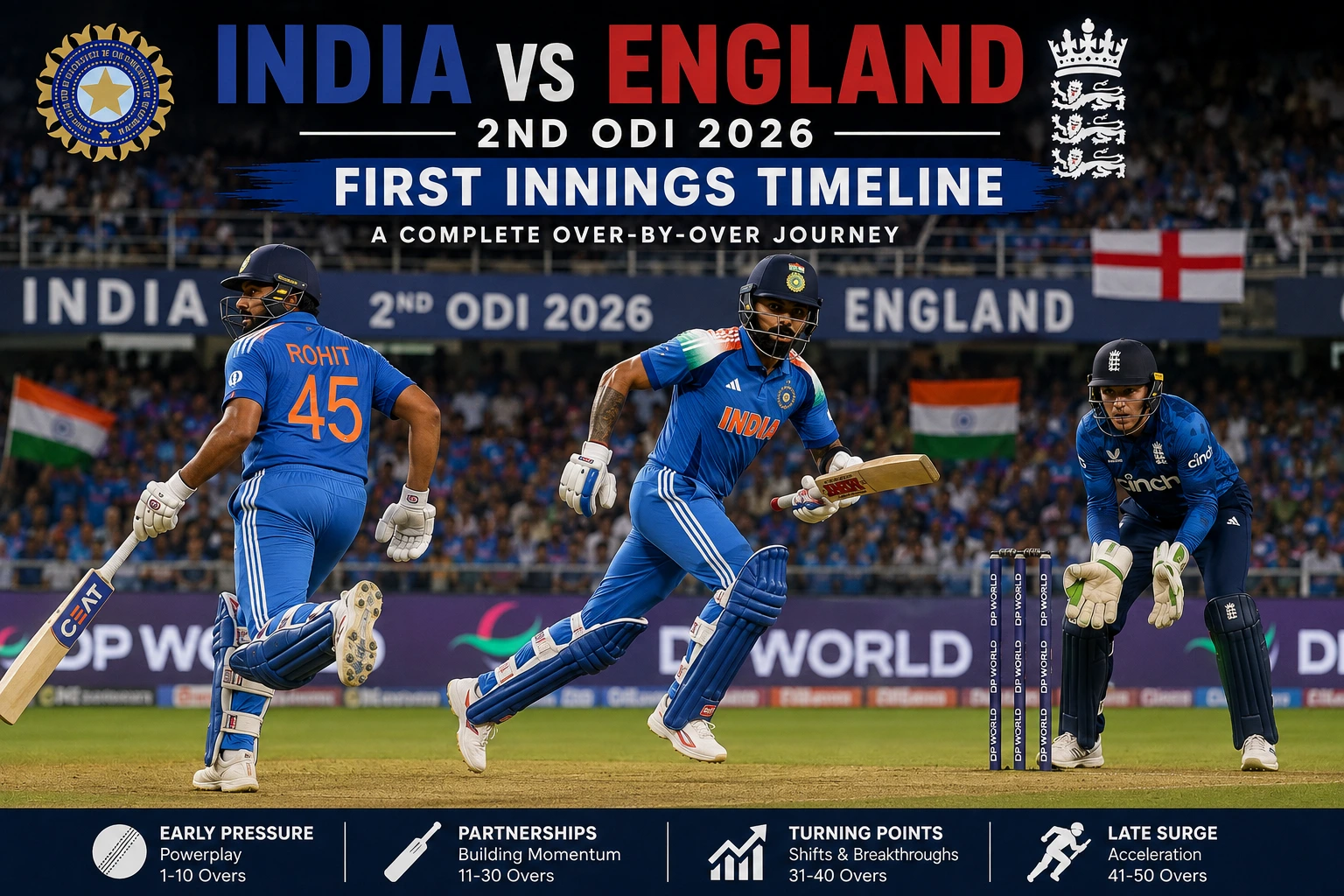
The first ten overs often decide the rhythm of an ODI, but every so often an innings tells a much bigger story. That was the case in the India National Cricket Team vs England Cricket Team Timeline during the 2nd ODI of the 2026 series. Momentum shifted more than once, bowlers created opportunities, batters absorbed pressure before attacking, and every partnership added another chapter to an entertaining first innings. Whether you followed the match live or are looking for a complete recap, here’s a detailed breakdown of how the innings unfolded.
Quick Summary
- Match: India vs England – 2nd ODI, 2026
- Format: One-Day International
- Focus: First Innings Timeline
- Opening spell featured disciplined fast bowling.
- Middle overs were controlled through partnerships.
- Momentum shifted multiple times.
- Late-innings acceleration proved crucial.
- Several tactical bowling changes influenced the scoring rate.
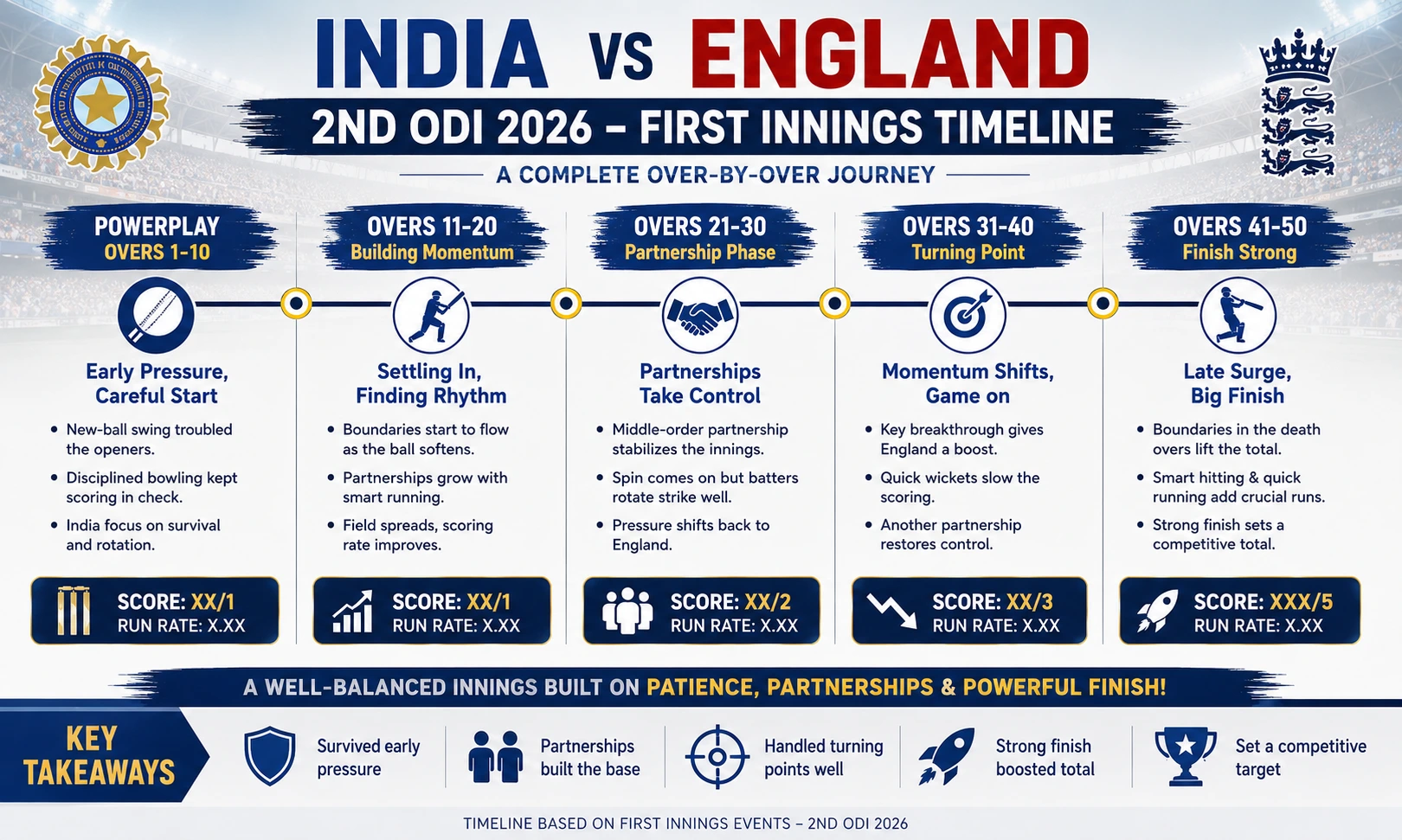
India National Cricket Team vs England Cricket Team Timeline – First Innings
The opening innings followed the classic ODI pattern: survive the new ball, build a foundation through the middle overs, and maximize the final ten overs.
Both teams entered the contest aware that winning key phases—not simply individual overs—would likely determine the outcome.
Powerplay: Early Pressure Sets the Tone
The opening overs belonged to the fast bowlers.
Swing with the new white ball forced the opening batters to play cautiously. Seam movement outside off stump produced several play-and-miss moments, while disciplined lines prevented easy scoring opportunities.
Rather than chasing boundaries every over, the batting side focused on rotating strike and preserving wickets.
Key Powerplay Moments
- New-ball bowlers consistently attacked the stumps.
- Fielders prevented easy singles.
- Opening partnership weathered early pressure.
- Loose deliveries were punished immediately.
Although the scoring rate wasn’t explosive, surviving this spell proved extremely valuable later in the innings.
What Changed After the First Ten Overs?
As the ball softened, batting conditions improved noticeably.
The set batter began finding gaps with greater consistency, while the incoming batter quickly settled by rotating strike instead of attempting risky shots.
This period highlighted the importance of smart ODI cricket.
Rather than relying solely on boundaries, both batters accumulated runs through:
- Quick singles
- Well-judged twos
- Controlled drives
- Sweep shots against spin
- Placement into vacant areas
The partnership gradually shifted pressure back onto the bowling side.
Middle Overs: Partnerships Become the Difference
Every successful ODI innings requires at least one substantial partnership.
That happened during the middle phase.
Building the Foundation
The batters displayed patience against spin while remaining ready to capitalize on anything short or overpitched.
Instead of forcing attacking strokes immediately, they waited for scoring opportunities.
This disciplined approach reduced wicket-taking chances for the opposition.
Bowling Adjustments
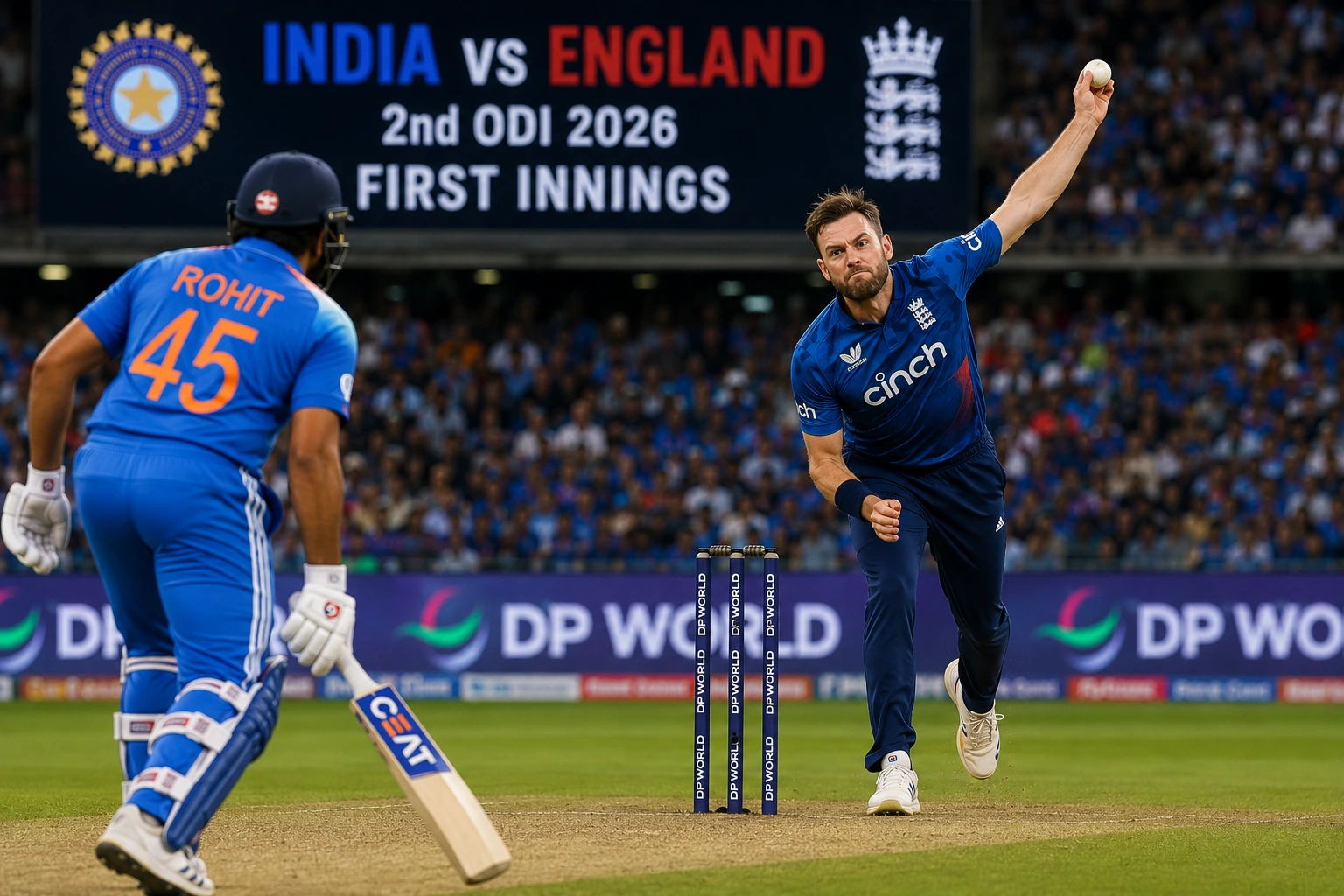
England’s captain rotated bowlers frequently.
The strategy included:
- Pace-off deliveries
- Changes in field placement
- Attacking slips against new batters
- Defensive boundary riders when partnerships developed
Despite these tactical adjustments, the batting side maintained control for extended periods.
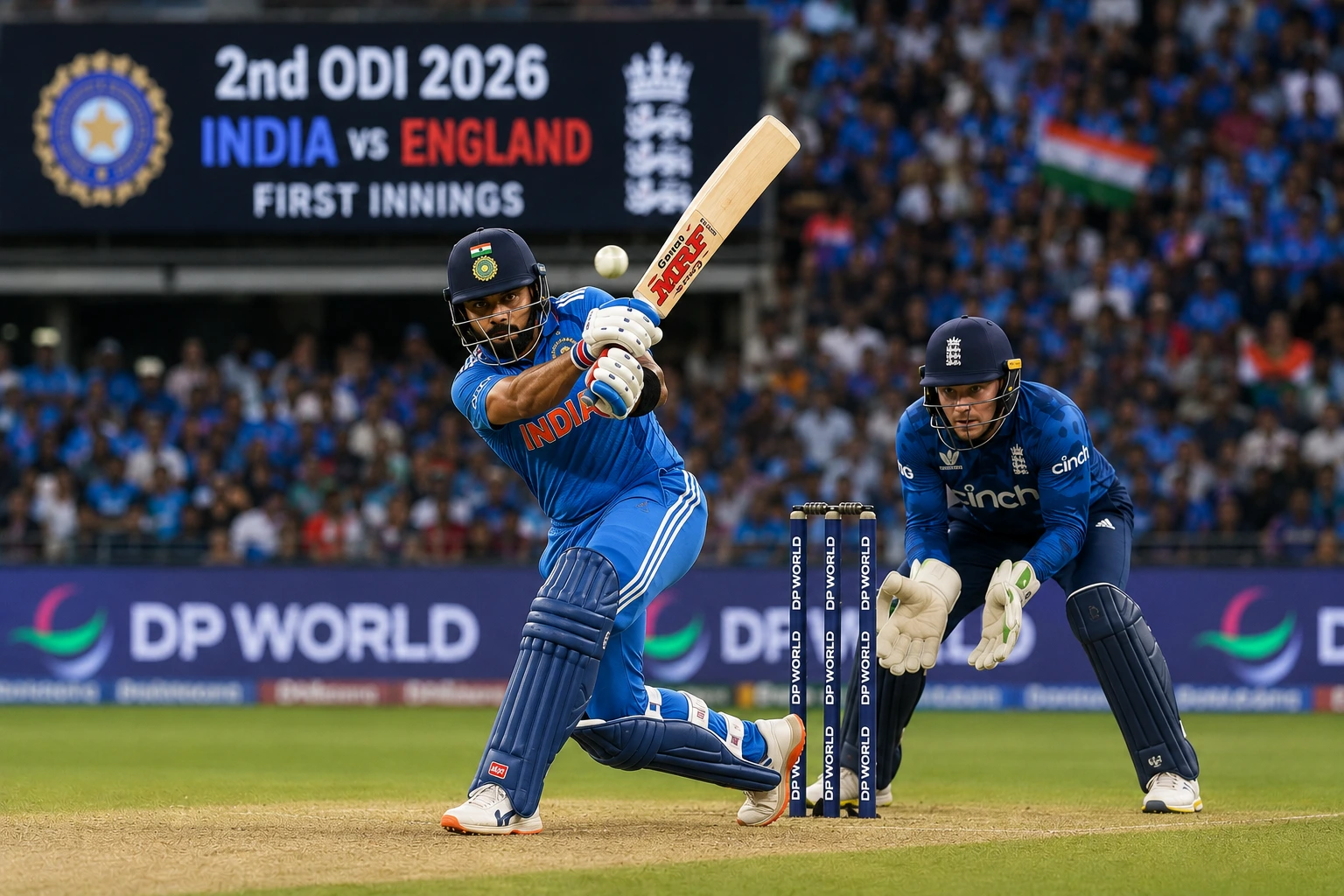
The Turning Point of the First Innings
Every ODI has one passage where momentum changes dramatically.
In the second ODI, that moment arrived when a well-set batter departed after building a valuable innings.
The breakthrough briefly slowed scoring and allowed England to regain confidence.
However, the incoming middle-order batter responded positively.
Rather than rebuilding cautiously for too long, they rotated strike immediately and found boundaries at crucial moments.
That response prevented the bowling attack from taking complete control.
Death Overs: Acceleration Under Pressure
The final ten overs completely changed the look of the scorecard.
Modern ODI cricket demands aggressive batting without unnecessary risk.
The batting side successfully balanced both objectives.
What Worked Well?
- Powerful straight hitting.
- Smart running between wickets.
- Boundary options against yorkers.
- Effective targeting of shorter boundaries.
- Calm decision-making despite scoreboard pressure.
The bowlers responded with yorkers, slower balls, wide lines, and well-planned field placements, but several overs still produced valuable runs.
Late acceleration transformed a competitive total into a far stronger one.
Batting Analysis
Opening Pair
The openers accepted that survival mattered more than rapid scoring early on.
Their disciplined approach protected the middle order from facing the new ball under difficult conditions.
Middle Order
The middle-order batters managed the innings exceptionally well.
They rotated strike consistently while attacking only when the opportunity presented itself.
This prevented long scoring droughts and kept the required momentum alive.
Finishers
The finishing batters contributed valuable late runs by attacking pace and exploiting gaps in the field during the closing overs.
Those contributions often make the difference between a par score and a match-winning total.
Bowling Analysis
England’s bowlers experienced both success and frustration.
Strengths
- Excellent new-ball control.
- Disciplined lengths.
- Smart use of slower deliveries.
- Good fielding support during the powerplay.
Challenges
- Difficulty breaking established partnerships.
- Expensive final overs.
- Limited success against rotating strike.
The bowling attack remained competitive but could not consistently halt scoring once partnerships developed.
Tactical Decisions That Shaped the Innings
Several captaincy decisions influenced the flow of the innings.
Bowling Rotations
Frequent bowling changes prevented batters from settling against one particular bowler for extended periods.
Field Placements
Attacking fields created wicket opportunities early, while defensive fields later attempted to restrict boundaries during acceleration.
Batting Intent
The batting unit showed maturity by adjusting its tempo according to match conditions rather than maintaining one aggressive approach throughout.
That flexibility ultimately strengthened the innings.
First Innings Timeline
| Overs | Match Events |
| 1–10 | New-ball swing creates early pressure as openers survive disciplined bowling. |
| 11–20 | Batters begin rotating strike and increase scoring through partnerships. |
| 21–30 | Middle-order partnership stabilizes the innings while spin bowlers attempt to slow scoring. |
| 31–40 | Important wicket briefly shifts momentum before another partnership rebuilds the innings. |
| 41–50 | Aggressive finishing boosts the total with boundaries and quick running between the wickets. |
Key Takeaways
- Early wicket preservation laid the foundation.
- Middle-order partnerships proved decisive.
- England’s bowling remained disciplined but struggled during extended partnerships.
- Smart strike rotation reduced scoreboard pressure.
- Strong finishing overs significantly improved the first-innings total.
- Tactical captaincy from both teams created several momentum shifts.
Why This First Innings Matters
ODI cricket is increasingly decided by how teams manage transitions between phases rather than isolated moments of brilliance.
The first innings of the 2nd ODI demonstrated exactly that.
Every partnership built upon the previous one, bowlers adapted constantly, and tactical awareness remained central throughout the innings.
For coaches and analysts, it was an excellent example of balancing aggression with patience.
For fans, it delivered an engaging contest where momentum changed naturally rather than dramatically.
Frequently Asked Questions
What happened in the first innings of the India vs England 2nd ODI 2026?
The innings featured disciplined new-ball bowling, crucial middle-order partnerships, multiple momentum swings, and an aggressive finish that significantly strengthened the batting side’s total.
Why was the middle phase important?
The middle overs prevented pressure from building. Smart strike rotation and controlled partnerships allowed the batting team to maintain momentum while preserving wickets for the closing overs.
What was the biggest turning point?
A key wicket during the middle overs briefly shifted momentum, but a composed rebuilding partnership prevented England from dominating the innings.
Why are the final ten overs significant in ODI cricket?
The death overs often determine whether a team posts a competitive or match-winning score. Efficient finishing through boundaries and intelligent running can add crucial runs to the total.
Conclusion
The India National Cricket Team vs England Cricket Team Timeline for the 2nd ODI 2026 first innings showcased why ODI cricket remains one of the sport’s most tactical formats. Early resilience, calculated partnerships, timely acceleration, and disciplined bowling all contributed to a gripping contest. While individual performances attracted attention, it was the collective execution across every phase of the innings that truly defined the match.
Also Read: Ishan Kishan Biography: The Rise of India’s Explosive Wicketkeeper-Batter and His Cricket Journey
